Two Thirds of Google Searches Never Send a Click
There is a number that quietly invalidates most content strategies written before 2025.
SparkToro's analysis of US Google searches from January to April 2026, using Similarweb clickstream panel data, found that less than one third of Google searches still send a click to the open web. Zero-click behaviour passed two thirds, and the study excluded searches inside Google's mobile app, where the researchers noted the rate may be even higher.
The AI Mode numbers are starker. Similarweb data puts AI Mode referrals at roughly 1.6–2.5% of queries, against a traditional Google referral rate of 17–19%. AI Mode is not a search results page that happens to summarise. It is built to keep the user inside the answer.
If your marketing plan assumes that publishing good content produces visits which produce conversions, the first link in that chain has been substantially cut. This post is about what replaces it.
Part 1: What the data actually says
Let's separate the reliable findings from the panic.
Zero-click is not new; AI accelerated it. The trend line runs back roughly a decade. Google has been progressively answering queries on the results page since featured snippets in 2014. AI Overviews did not start the trend — they sharply steepened it.
The damage is uneven by vertical. AI Overview coverage varies enormously by industry. Tracking through early 2026 showed coverage running very high in healthcare, B2B technology and education, while e-commerce and shopping queries showed far lower AI Overview presence — reportedly pulled back after AI answers converted poorly into sales. If you sell physical products, your exposure is smaller than the headlines suggest. If you sell B2B software or publish informational content, it is larger.
Publishers took it hardest. Digital Content Next tracked Google referrals for 19 major publishers and found a median year-over-year decline around 10%, with non-news publishers hit harder than news. Chartbeat data cited in the Reuters Institute's 2026 trends report put global organic search traffic to over 2,500 sites down by roughly a third year over year. Some individual publishers have reported far worse for specific query sets.
Paid results absorbed the clicks that remained. This is the finding most people miss. An analysis of SERP click distribution across four US verticals from January 2025 to January 2026 found paid results were the biggest winner in every category — in headphones, combined text ads and shopping ads went from about 16% to 36% of all clicks in a single year. Organic click share fell in parallel. The clicks did not vanish evenly; they moved.
And here is the finding that points to the answer. Research reported through 2026 found that when AI Overviews appear, click-through rates increase — by around 18% — for searches where someone looks up a specific site or brand by name, rather than searching a general topic.
Read those last two together. Generic informational queries stopped sending traffic. Branded queries got better. The variable that decides which bucket you are in is whether people already know your name when they open a search box.
That is not an SEO problem. It is a distribution problem.
Part 2: Zero-click marketing, defined properly
There is a useful distinction being made in the industry right now, and it is worth adopting precisely.
Zero-click search describes a behaviour: the results page answers the query, so nobody clicks.
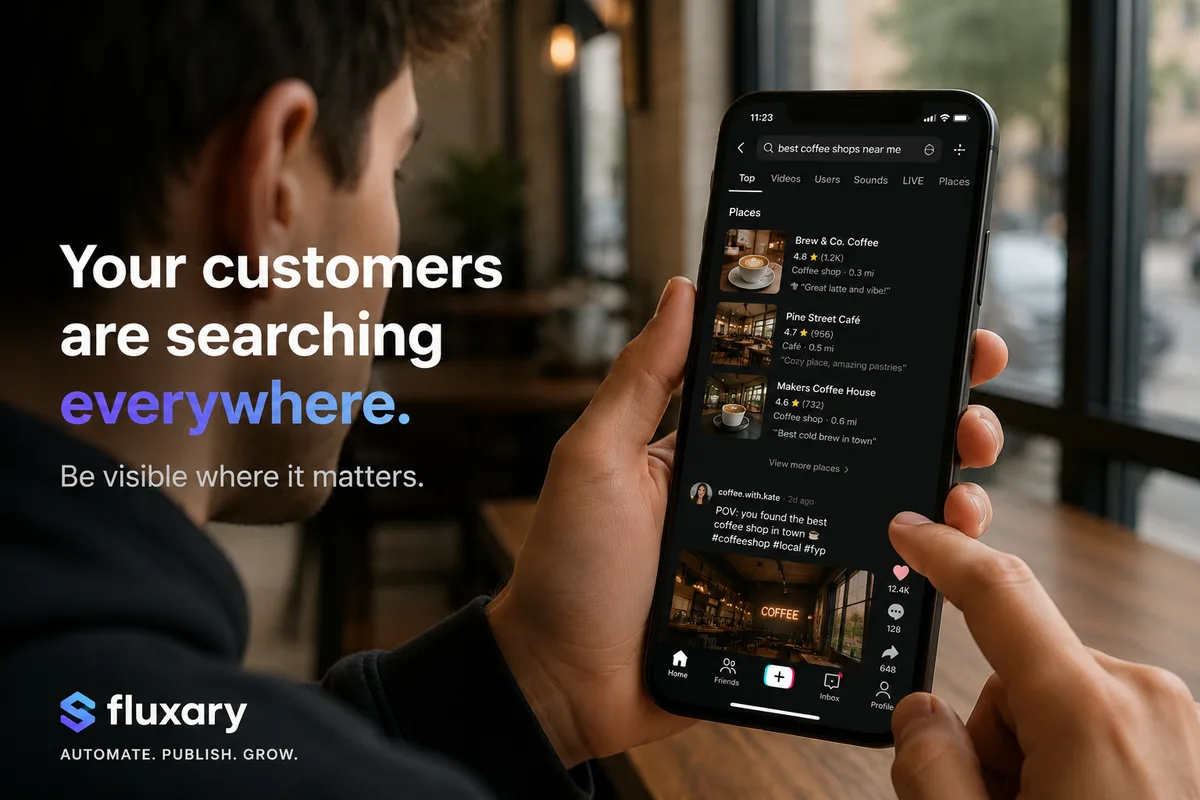
Zero-click marketing describes the strategic response: treating that surface — the AI answer, the feed, the search page itself — as the placement, rather than as a mechanism for delivering someone to your website.
The analogy that makes it click: a billboard does not send people to your website either. Nobody measures billboard ROI in clicks. Yet nobody concludes billboards are worthless.
For fifteen years, digital marketing had the luxury of a medium where the impression and the click were bundled together, and it built its entire measurement culture on the click because the click was free to count. That bundle has come apart. The impression still exists — arguably there are more impressions available than ever. What disappeared is the free measurement.
Rand Fishkin's recommendation, from the study itself, is the strategic summary: invest in brand awareness and influence on the platforms where your audience already spends time, regardless of whether those efforts drive direct website visits.
That is a hard instruction for a performance-marketing culture to follow, because it asks you to do work whose value you cannot attribute cleanly. It is also, at this point, the only instruction the data supports.
Part 3: What to actually do
Five shifts, in order of leverage.
1. Move the content to where it is consumed
If people are not clicking through to read your article, the article should go to them.
This is the practical meaning of zero-click marketing for a small company. Every substantive thing on your website — your case studies, your product reasoning, your documentation, your pricing rationale, your comparisons — should exist in a native form on the surfaces where your audience already is. Not as a link with a teaser sentence. As the actual content, readable in the feed, complete in itself.
The instinct to withhold the substance to force a click is now backwards. The click was the price you charged for the value. That price is no longer collectible on most queries, and holding out for it just means fewer people receive the value at all.
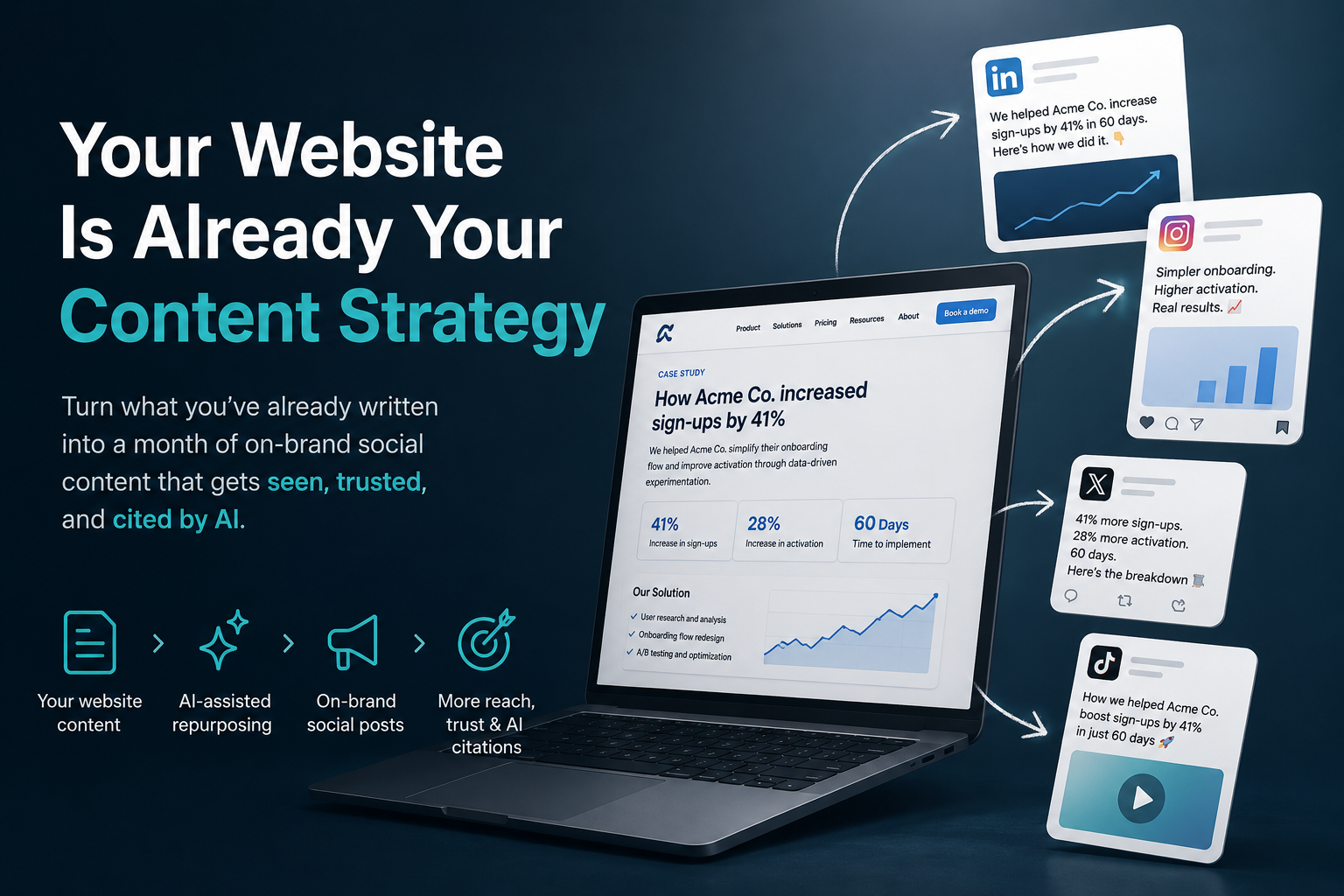
The operational version: every source page on your site becomes a set of native posts across platforms. Not one link post per page — a set of distinct posts, each carrying a real point from that page, in the format the platform actually distributes. This is repurposing done as a distribution system rather than as a content-calendar filler, and we broke down the full workflow in our guide to turning your website into social content.
2. Build branded demand deliberately
Branded search is the one query type that improved. That makes brand recognition the highest-leverage asset in a zero-click environment, and it compounds in a way rankings do not.
Building it is unglamorous:
- Be consistently present on two platforms rather than sporadically present on six.
- Use a recognisable format. A visual signature, a recurring post structure, a distinctive way of framing your category. Recognition is a memory effect and memory needs repetition of form, not just frequency of posting.
- Attach your name to a specific idea. Companies people can remember are companies that stand for one arguable claim about their category. "We do X" is forgettable. "We think everyone in X is doing Y wrong" is not.
- Show up in third-party contexts. Podcasts, newsletters, communities, comparison lists. Being mentioned by someone else builds recognition faster than mentioning yourself.
3. Change what you measure — before your dashboard forces you to
The measurement problem is real and pretending otherwise wastes months. Practical replacements:
Branded search volume. Track it monthly. If your distribution is working, people search your name more often. This is the cleanest available proxy for brand-building, it is free to check, and it maps directly to the query type that still converts.
Direct and dark-social traffic. Visits with no referrer are not noise. They are people who already knew you.
Impressions and completion, per surface. Views, saves, watch-through. If the surface is the placement, then reach on that surface is the delivery metric.
AI citation presence. Monthly, run the fifteen or twenty prompts a real buyer would type into ChatGPT, Perplexity and AI Mode. Record whether you appear, how you are described, and who appears instead. Since AI Mode refers at low single-digit percentages, appearing inside the answer is now the outcome — not a route to an outcome.
Self-reported attribution. "How did you hear about us?" on your signup form, as free text. It is unfashionable and it is currently more accurate than your analytics.
What to stop over-weighting: total organic sessions as a health metric, and last-click attribution for anything above the bottom of the funnel. Both are now measuring a channel that structurally shrank rather than measuring your performance in it.
4. Keep doing SEO — but for the queries that still click
Zero-click is not "SEO is dead." It is a redistribution of where SEO pays.
Still worth the investment:
- Branded queries — protect and win everything on your own name, including comparisons and alternatives.
- Local queries — these still send clicks and still convert.
- High-intent transactional queries — someone ready to buy still clicks through to buy.
- Long-tail question queries — these trigger AI Overviews more often, which is bad for clicks but is exactly how you get cited, and citation builds the recognition that drives branded search.
Deprioritise: broad informational keywords whose entire purpose was top-of-funnel traffic. That traffic is where the losses concentrated, and no amount of optimisation restores a click the interface no longer offers.
5. Accept that the placement is the product
The mental shift underneath all of this: stop treating every piece of content as a vehicle for getting someone somewhere else.
A post that is read, understood and remembered in the feed did its job. A summary of your position inside an AI answer, with your name on it, did its job. A comparison list that names you did its job. None of these produce a session in your analytics. All of them produce the recognition that makes the eventual branded search happen.
Part 4: A 30-day transition plan
For a small team, this is roughly a month of work.
Week 1 — Establish the baseline. Record current branded search volume, direct traffic, organic sessions by query type, and your presence across 20 buyer prompts in three AI assistants. You need this before you change anything, because in three months you will not remember where you started.
Week 2 — Audit your content for extractability. Go through your site and mark every page by what standalone claims it contains. You are looking for assertions that survive removal from their page: a number, a trade-off, a customer outcome, a position on your category. These are your distribution units. Pages with none are pages that were only ever going to work as traffic bait.
Week 3 — Build the distribution pipeline. Pick two platforms where your buyers actually are. Convert your extracted claims into native posts for each. Set a cadence you can sustain — consistent weekly beats sporadic daily. Post the substance, not a teaser and a link.
Week 4 — Rebuild the dashboard. Replace organic sessions as your headline metric with branded search volume, impressions by surface, AI citation presence and self-reported attribution. Tell whoever reads your reports why the headline number changed, before they ask.
Then run it for a quarter. Brand-building metrics move slowly and they move up and to the right in a way that traffic metrics no longer do.
Frequently asked questions
What percentage of Google searches are zero-click in 2026? SparkToro's analysis of US Google searches from January to April 2026 found less than a third still send a click to the open web — putting zero-click behaviour above two thirds. The study excluded Google's mobile app, where the rate may be higher still.
How much traffic does Google AI Mode send? Similarweb data puts AI Mode referrals at roughly 1.6–2.5% of queries, versus 17–19% for traditional Google search. AI Mode is designed to keep users inside the answer.
Is SEO dead in 2026? No, but its returns redistributed. Branded searches, local queries and high-intent transactional searches still send clicks and still convert. Broad informational keywords aimed at top-of-funnel traffic are where the losses concentrated.
Do AI Overviews always reduce clicks? Not for every query type. Research reported in 2026 found click-through rates rose about 18% when someone searches for a specific site or brand by name, even with an AI Overview present. The losses concentrate on general topical queries.
What is zero-click marketing? The strategic response to zero-click search: treating the results page, AI answer or social feed as the placement itself rather than as a mechanism for delivering visits. You optimise for being seen and remembered on that surface, not for the click out of it.
How do I measure marketing that doesn't produce clicks? Branded search volume, direct and no-referrer traffic, impressions and completion rates per surface, presence in AI answers across a fixed prompt set, and self-reported attribution on signup. None is as clean as last-click was; together they are more accurate than pretending last-click still describes reality.
Which industries are hit hardest? Coverage tracking through early 2026 showed very high AI Overview presence in healthcare, B2B technology and education, and much lower presence in e-commerce and shopping queries. Publishers of informational content have been hit hardest of all.
Should I stop publishing blog posts? No — but change their job. A post's purpose is now to be a defensible source that AI systems can cite and that you can atomise into distributed content, rather than a landing page for search traffic. Write fewer, deeper, more specific pieces and distribute each one properly.
Distribution is the whole strategy now
The uncomfortable summary: for most companies, the bottleneck was never producing content. It was that the one distribution channel everyone relied on was free, automatic and someone else's. That channel is now keeping the audience for itself.
What is left is the work of actually putting your material in front of people, repeatedly, on the surfaces where they already are — which is slower, less measurable, and considerably more durable.
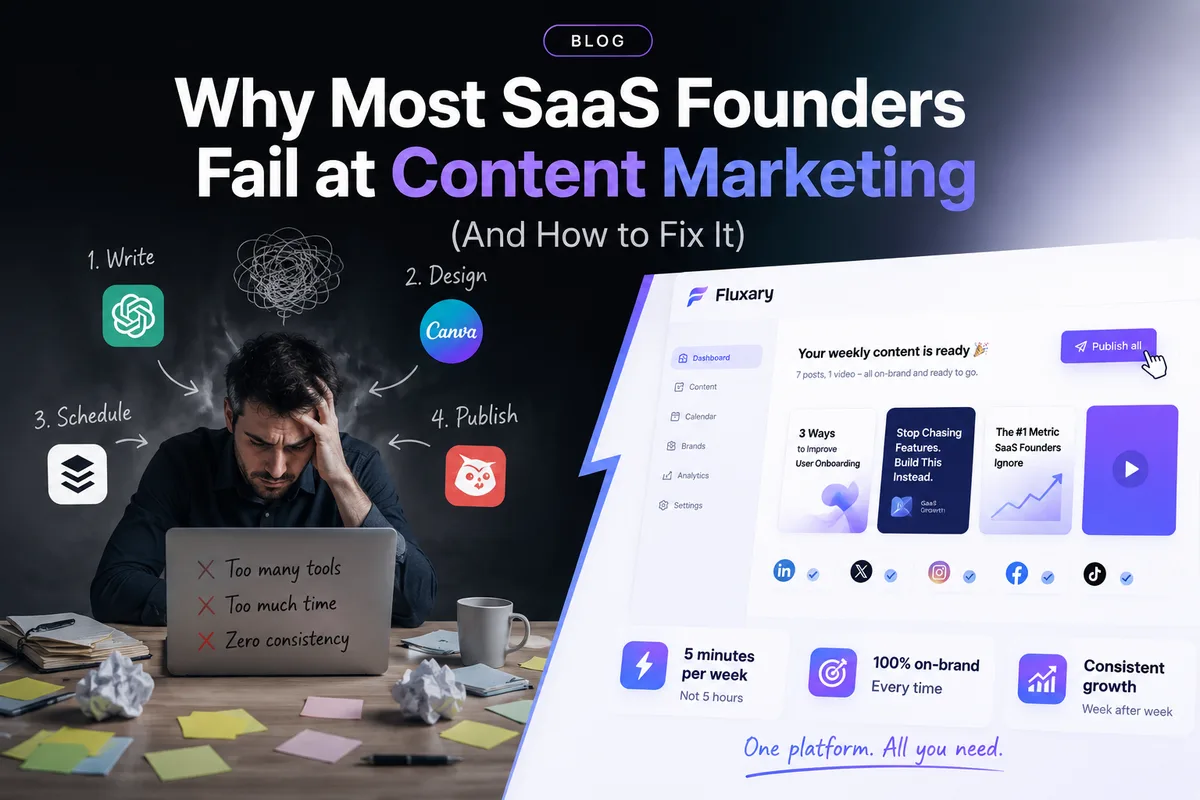
Fluxary handles the mechanical half: it pulls the real substance out of your website — your pages, your case studies, your documentation — turns it into native on-brand posts for each platform, and publishes on a schedule you set. You supply the claims and the judgment. It supplies the consistency that brand recognition actually requires.
Turn your website into a distribution engine →
Data referenced draws on publicly reported research as of September 2026, including SparkToro's 2026 zero-click study using Similarweb panel data, Similarweb's AI Mode referral analysis and zero-click marketing research, Digital Content Next's publisher referral tracking, Chartbeat data cited in the Reuters Institute's 2026 trends report, BrightEdge AI Overview coverage tracking, and Amsive research on branded-query click-through as reported by Search Engine Journal. Search behaviour is shifting quickly — verify figures against current sources before using them in planning.