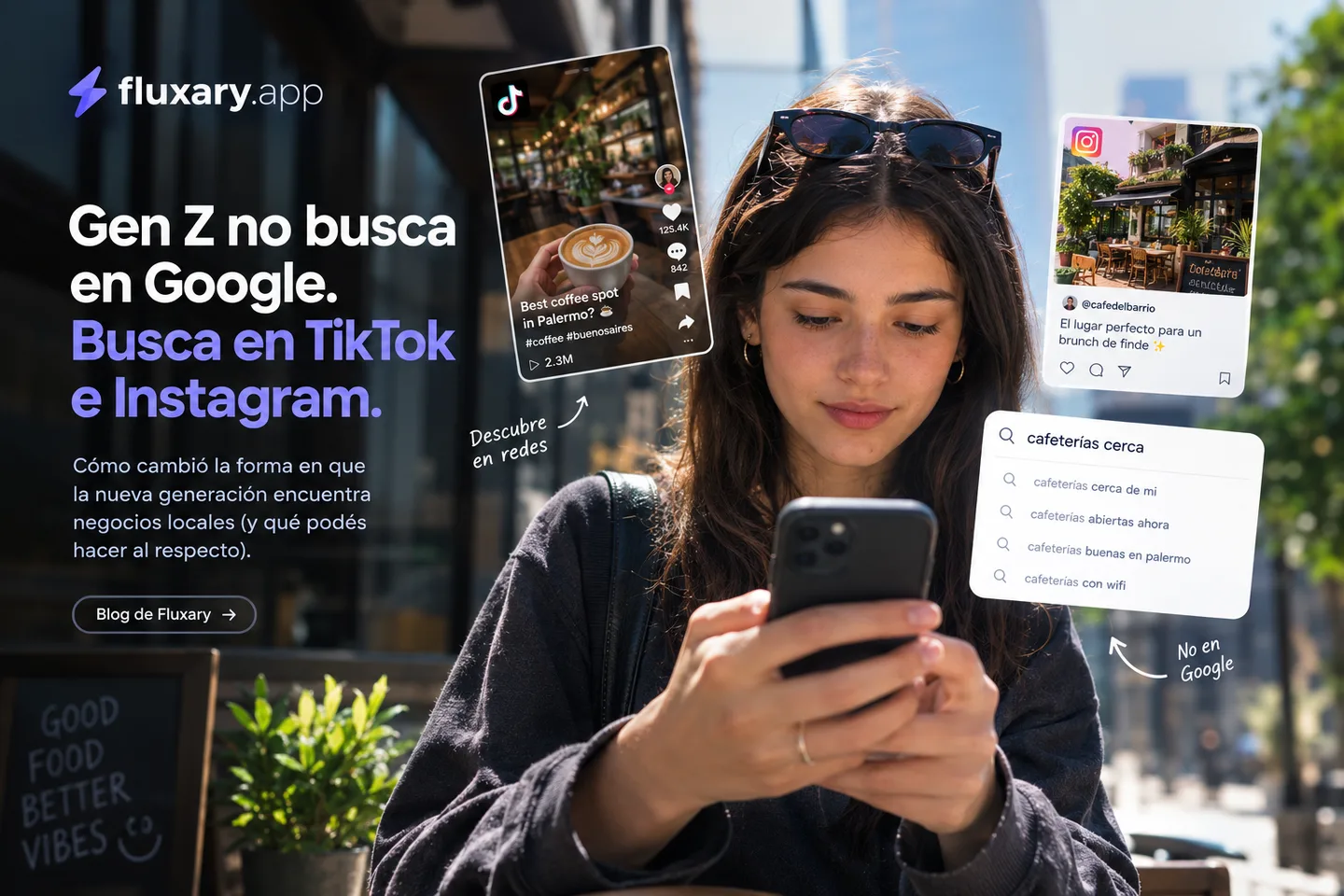
You have seen the statistic. Around 40% of Gen Z uses TikTok and Instagram to search instead of Google. It appears in pitch decks, agency proposals and roughly every social media strategy article written since it surfaced.
It comes from 2022.
That does not make it wrong, but it does make it four years old, and the research published since then tells a story that is both less dramatic and considerably more useful if you are the person who actually has to write the posts.
What the 2026 data actually shows
Two findings matter.
The first is that usage went up while preference went down. By 2026, roughly two thirds of Gen Z had tried searching on TikTok. But when Adobe asked which platform people actually prefer when they need an answer, TikTok's share had dropped by half compared to 2024, to around 4%. People tried social search, kept using it, and largely concluded that Google still works better for most questions.
The second finding is more important: this is not substitution, it is addition. GWI data reported by Forbes found Gen Z search usage sitting at roughly 67% for Instagram, 62% for TikTok and 61% for Google. Those numbers are close to identical, and they add up to well over 100% because people use several platforms depending on the question.
So the correct conclusion is not "social replaced search." It is that people now route different questions to different places, and your brand is invisible in whichever ones you have not optimised for.
The queries that actually go to social
Social search wins a narrow, predictable set of question types. They share one property: a video or an image answers them faster than a paragraph does.
- Show me questions. How something looks, how it fits, how it is worn, how a space feels. Any query where a description is worse than seeing it.
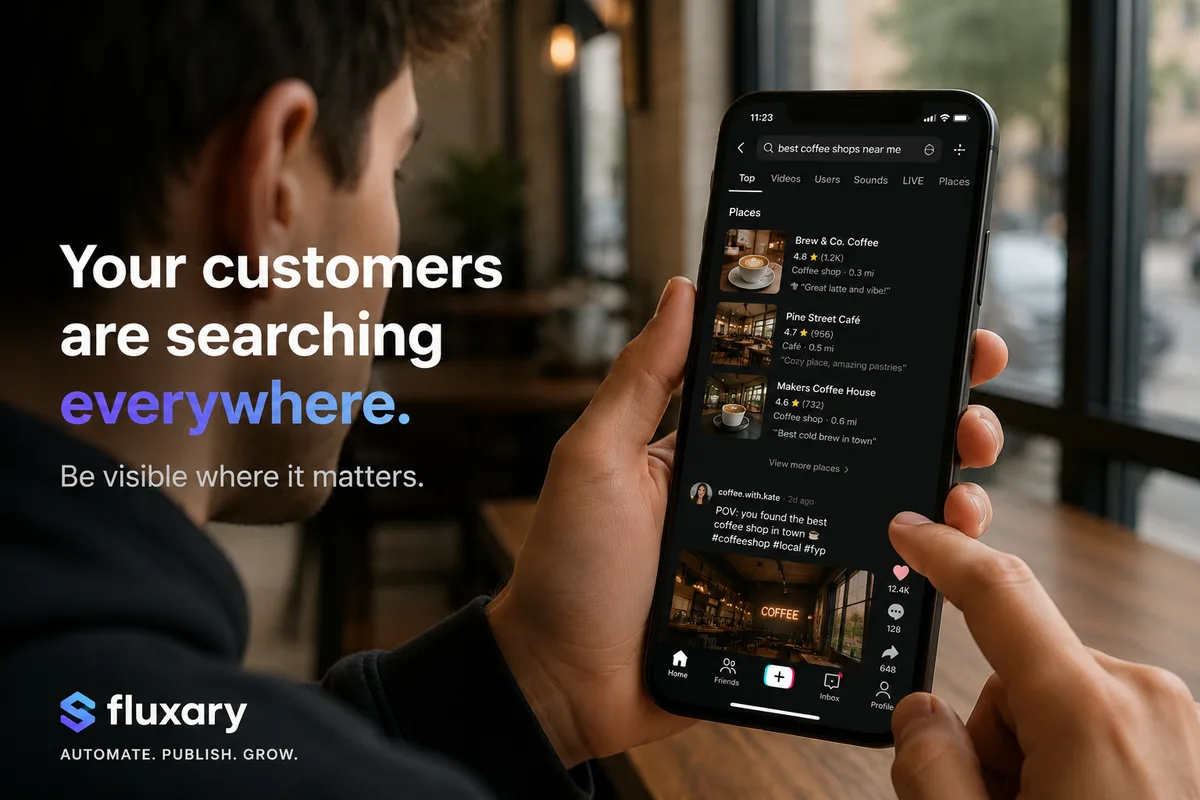
- Local and visual. Where to eat, what a venue looks like inside, whether a neighbourhood feels right. This is why a restaurant with no recent posts loses to one with fifteen.
- How to, when the process is physical. Assembly, technique, repair, application. Watching beats reading.
- Recommendation and opinion. What people who bought this actually think, phrased as a real person talking rather than a review page.
If your business answers questions like these, social search is a real acquisition channel and you should treat it seriously. If your business sells enterprise compliance software, it is not, and rebuilding your content strategy around Gen Z discovery habits would be a mistake. Be honest about which one you are.
Why most brand posts are invisible in search
Here is the practical problem. Even brands that post consistently write captions that cannot be found.
The typical brand caption is a mood. A sentence about excellence, a line about passion, three emojis, eleven hashtags. It contains almost no words a human being would type into a search box. The algorithm has nothing to match against, so the post is served briefly to existing followers and then disappears.
Meanwhile the post that gets found six months later says something plain like "how to clean a stainless steel espresso machine" in the first line of the caption, out loud in the first three seconds of the video, and in burned-in on-screen text.
The difference is not creativity. It is keywords, placed where each platform can read them.
Where the platforms actually look
Each one indexes different things, and knowing which is most of the work.
TikTok transcribes spoken audio and reads on-screen text. Say your keyword out loud early. Put it in the caption's first line. Burn it into the video as text. Three to five specific hashtags, not thirty generic ones.
Instagram reads captions, alt text and the account bio. The Explore tab increasingly behaves like a visual search engine, with people typing queries such as "small kitchen storage ideas." Write alt text as a description of what is in the image, using the words someone would search for.
YouTube is the closest to a traditional search engine of the group, indexing titles, descriptions and transcripts. A large share of people use it to look things up the same way they use Google. Titles should read as queries, not as clever headlines.
LinkedIn surfaces posts in search for professional terms, and increasingly in Google results as well. The first two lines carry most of the weight because everything after is collapsed behind "see more."
Pinterest is a pure search engine wearing a social network costume, processing billions of searches a month. Board names and pin descriptions are the ranking surface.
The consistency problem nobody solves
Everything above is straightforward to understand and difficult to sustain.
Search visibility on social is cumulative. One well optimised post does nothing. Forty of them, across six months, covering the range of questions your customers actually ask, builds a body of content that keeps surfacing long after you published it. That is the entire mechanism.
Which means the real constraint is not knowledge. It is throughput. Most small teams know they should be publishing keyword-aware posts several times a week on multiple platforms, and they simply do not have the hours.
The source material is usually sitting unused on their own website. Product pages, service descriptions, FAQ sections and blog posts already contain the exact language customers search for, written by someone who understands the business. It is just formatted for a website rather than a feed.
A workflow that actually holds
- Start from your own site, not from a blank page. Pull the questions your existing pages already answer. That language is more searchable than anything invented from scratch.
- Write the query, then write the post. Decide the exact phrase someone would type before writing a single word of caption. If you cannot name it, the post will not be found.
- Put the keyword in the first line. Not the third paragraph. Not only in the hashtags.
- Publish the same idea in different formats per platform. Same substance, different shape. Cross-posting identical content everywhere performs worse than adapting it.
- Measure downstream signals, not impressions. Profile visits, saves, DMs with questions and clicks to product pages tell you whether search visibility is reaching people with real intent. High views with no action usually means the positioning is off.
Frequently asked questions
Is social search replacing Google?
No. The 2026 data shows multi-platform behaviour rather than substitution. Gen Z search usage across Instagram, TikTok and Google is roughly equivalent, and Google remains the preferred destination when people want a reliable answer. Social search wins for visual, local and recommendation-driven questions.
Do hashtags still matter for social search?
They help, but less than caption keywords, spoken audio and on-screen text. Three to five specific hashtags outperform long generic lists.
How long does it take to see results from social search optimisation?
Longer than paid, shorter than traditional SEO. Because the effect is cumulative, most brands see meaningful search-driven discovery after a few months of consistent, keyword-aware publishing rather than after a handful of posts.
Should I optimise for AI answer engines too?
It is the same underlying work. Clear, specific, genuinely useful content that answers real questions is what gets surfaced, whether the surface is a social feed or a generated answer. Vague brand language performs badly in both.
The short version
The headline everyone repeats is outdated, but the underlying shift is real. People search in more places than they used to, and each place reads different signals. Your posts either contain the words people search for, or they do not.
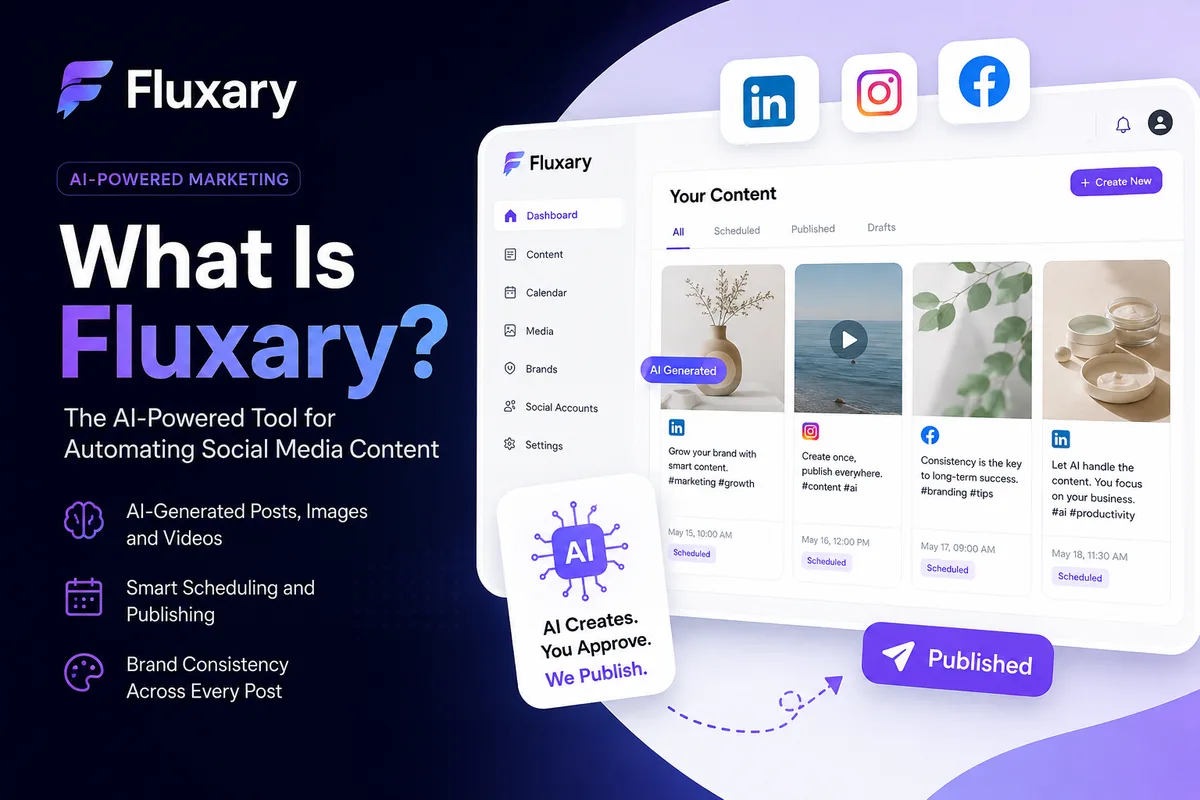
Fluxary turns your website into search-aware social content and publishes it automatically — pulling the language already on your pages and shaping it into posts for each platform, on a schedule you set once. See how Fluxary works