Building in public isn't a trend — it's one of the highest-ROI things a solo founder can do before launch. The founders who ship to an audience didn't get lucky. They built that audience the same way they built the product: consistently, in the open, over months.
Why Most SaaS Products Launch to Silence
You spend six months building. You ship. And then… nothing. A handful of Product Hunt upvotes, two DMs from other founders, and a very quiet Tuesday.
This is rarely a product problem. It is a timing problem. Launch day is when you harvest an audience; it is a terrible day to start building one. The people who convert in the first week were paying attention weeks or months earlier — not because of ads, but because they had been watching you work.
Nobody was watching, so nobody showed up. That is the whole mechanism.
What "Building in Public" Actually Means
It means sharing the process, not just the outcomes.
Wins are the least interesting thing you can post, because everyone posts those. The valuable material is the stuff that feels too small or too unfinished to publish:
- The feature you rewrote twice because the first version confused every tester
- The pricing decision you are still not sure about
- The support ticket that changed your roadmap
- The thing you assumed about your users that turned out to be wrong
None of that is a highlight reel. All of it builds the one thing that actually converts strangers into customers: the sense that a competent human is behind this and is paying attention.
What You're Really Building Is Proof
A pre-launch audience is not a vanity number. It is a standing body of evidence that you understand the problem you are charging money to solve.
By the time you launch, six months of posts have quietly done three jobs:
- Credibility. Someone can scroll back and see you have thought about this for a long time.
- Distribution. You have people to tell, and some of them will tell others.
- Feedback. You shipped the right thing, because you were arguing about it in public the whole time.
That third one is underrated. Founders who build in public tend to launch better products, not just better-known ones.
The Real Problem: You're Too Busy Building
Almost every founder knows all of the above. They still don't do it, and the reason is boring: it costs time they genuinely do not have.
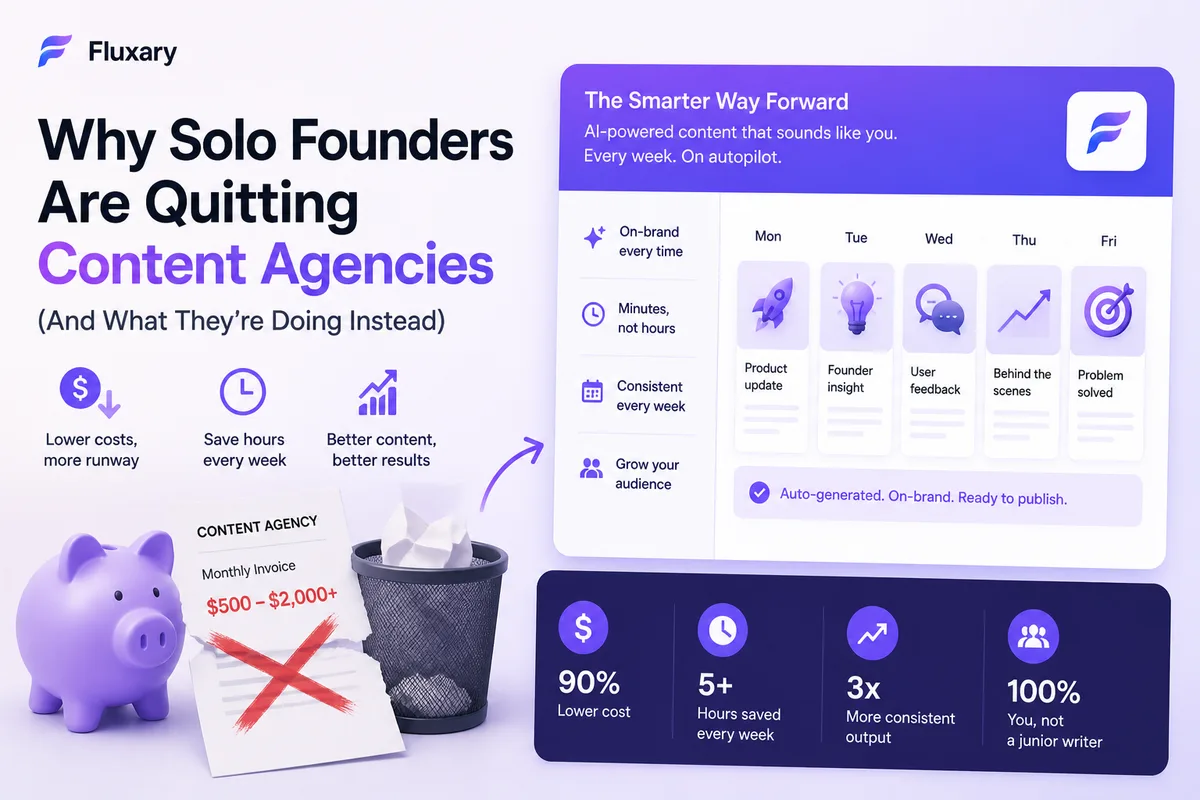
A single LinkedIn post is twenty to forty-five minutes once you count deciding the angle, writing it, making an image, and scheduling it. Do that four times a week and you have spent hours that were supposed to go into the product.
So the founder tries for three weeks, feels the drag, and goes quiet — usually right around the point where the compounding was about to start. We wrote about the mechanics of that collapse in why most SaaS founders fail at content marketing.
A Weekly Framework That Survives a Bad Week
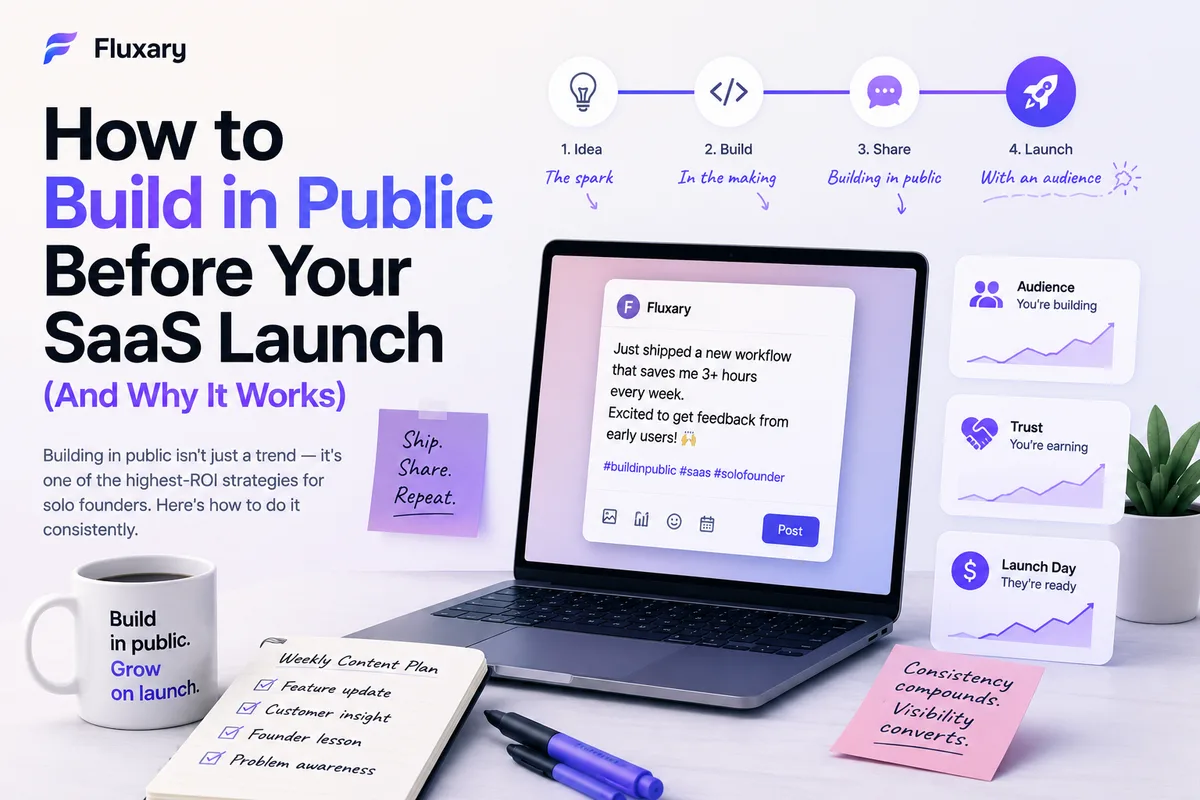
You do not need a content strategy. You need four slots you can fill without thinking:
- Monday — Feature update. What did you build or ship? A UI fix counts. Small is fine; absent is not.
- Wednesday — Customer insight. Something a user said, a support ticket that surprised you, a pattern in your onboarding data.
- Friday — Founder lesson. One thing that challenged you or changed your mind this week.
- Weekend — Problem awareness. A post about the pain you solve, with no mention of your product at all.
That last slot is the one founders skip, and it is the one that reaches people who have never heard of you. Product posts reach your existing audience. Problem posts recruit a new one.
Four posts a week is roughly a hundred posts before a six-month launch. That is the asset.
Where It Usually Falls Apart
Two failure modes account for most of it.
Posting only when there's news. This ties your visibility to your release cadence, which for a solo founder is lumpy. Three quiet weeks of deep work become three invisible weeks. The framework above fixes this because three of the four slots need no news at all.
Waiting until it's polished. The post you spend an hour perfecting does not outperform the one you wrote in ten minutes often enough to justify the difference. And the hour version is the one you skip when you are tired.
Make the Production Automatic, Not the Thinking
The hard part was never knowing what to say. It is producing the output every week, for months, while also building the thing.
That is the specific bottleneck Fluxary removes. You paste your URL; it reads your site and extracts your brand — tone, value proposition, audience, colours — and then generates a full month of on-brand content in one pass: copy, an AI image per post, and video where it fits.
You review the month in one sitting, edit anything that doesn't sound like you, and approve. Nothing publishes without that approval. Then it goes out to LinkedIn, Instagram and Facebook on schedule.
You stay the author. The production stops being your job. Plans start at $19/month — see the plans if you want the numbers.
The Compound Effect
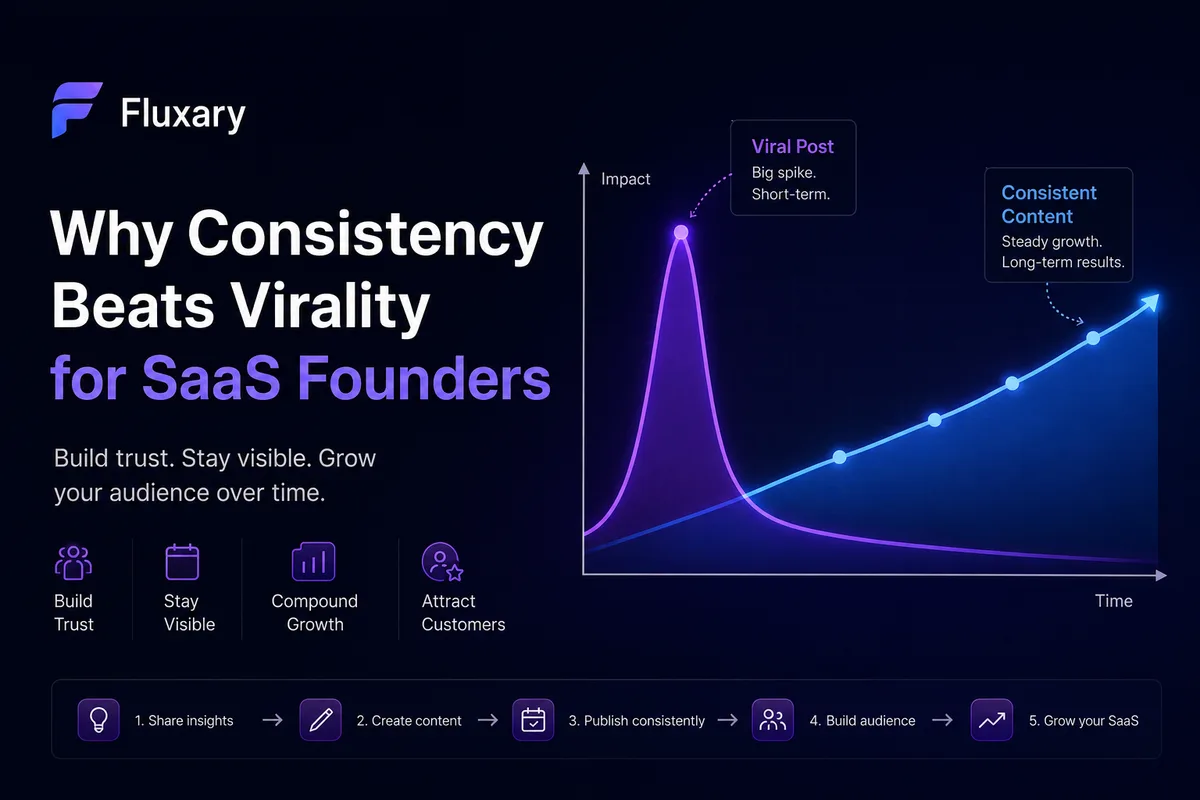
Building in public pays nothing for a while, and then pays all at once.
Week one is silence. Week four, a few people reply consistently. Month three, someone in a Slack group mentions your project before you do. Month six, you launch to people who already know what you are building and why you are the one building it.
None of that is available to the founder who starts posting the week of launch. It is only available to the one who started six months earlier and did not stop.
Post something this week. Then make it a system — because a system is the only thing that survives building a company alone.